

© 2026 Duleepa Wijayawardhana
All rights reserved. This is an original piece of fiction.
Featured in Episode 62 of Tales under the cat tree
Note: No AI was used in the creation of this story.
When my father was a teenager he would often ride a rusted bike along the dirt laneways through the cleared jungle to the village school. Like every other school boy at the time, he wore his hair slicked back with cream with his white school uniform. His entire journey on muggy days was spent making sure the clay mud stayed away from the legs of his trousers. More than once though, he would set his face, ring his bell, and ride on past the school gates, past the backs of the students filing in, past the grumpy eyes of the balding headmaster. One day he said good bye to his mother, grabbed the jam sandwich in the bag she offered, and cycled off to school, past the school, down to the main road and didn’t stop pedaling until he reached the colonial port city.
By the time I was born, we had all moved to a suburban house, complete with fenced yard and a shiny new car. My father had worked on the docks, run the docks, and soon enough had become a marine engineer. My mother had found a home in his arms and soon I would be the one delivered to that home in the trembling arms of my father from the hospital.
As I grew older, I ran our yard ragged, first laying tracks with my little feet, later stripping the grass riding my training bike as my father sat on the steps with whoops of encouragement. Every day he would kiss my mother, take his packed lunch, grin and wink at me before heading out the door. On weekends he would take me with him to the Automobile Association Club. Seated at a privileged spot at the Club bar he would clink pint glasses, tell bawdy stories, and wink at me as I played to the edge of the bar. In a time when driving home after some pints was not only ignored but encouraged, we would do so together with me keeping an eye out, a daring game somewhere between hide and seek and frogger.
One day he kissed my mother, took his packed lunch, hugged me close and pressed a letter into my hand. His letter was short, written in an old cursive form. He promised he would write, he would make sure that I didn’t want for anything, and he would bring the world home. He promised he would come back home.
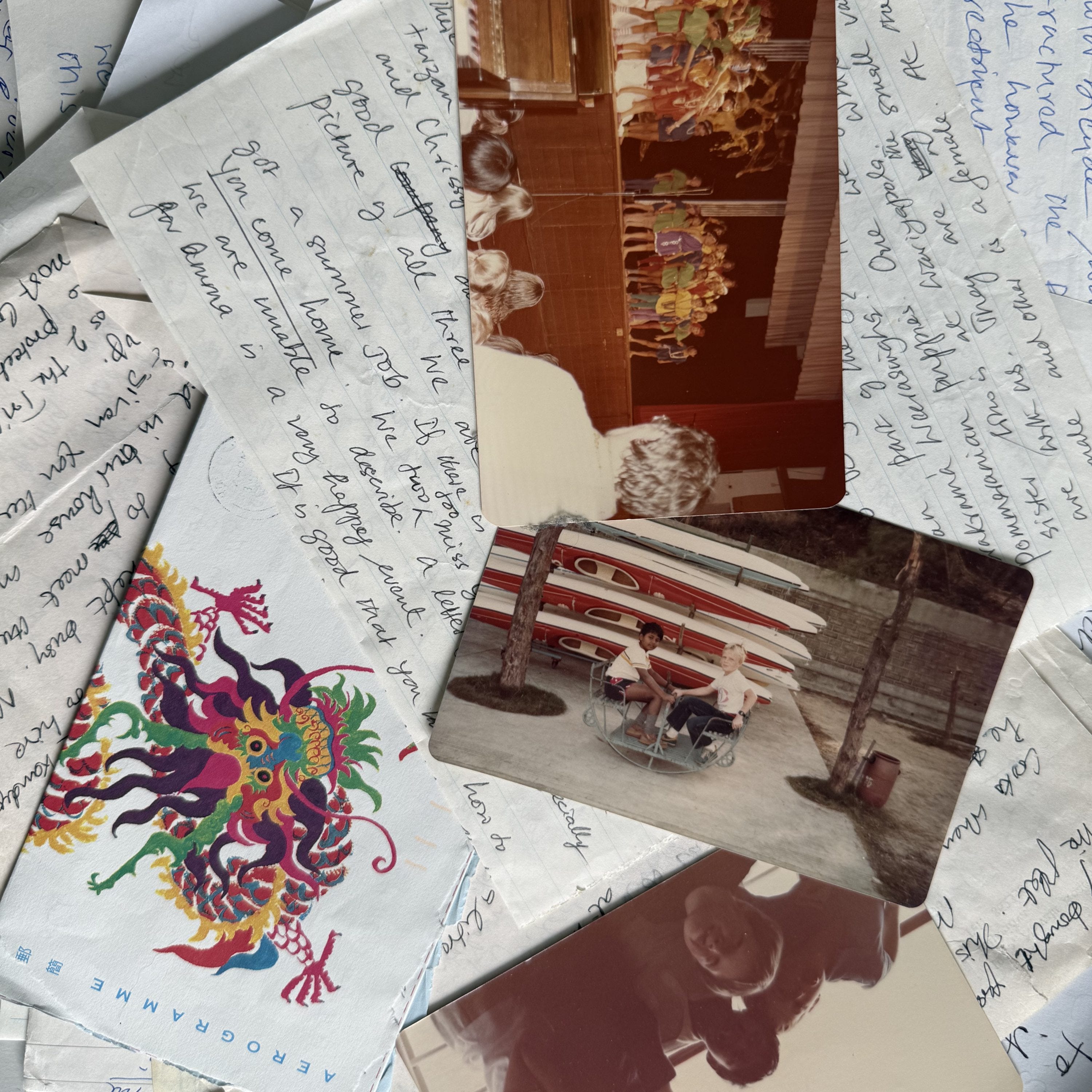
While he never stepped through the door again, every month checks arrived dutifully in ragged envelopes endorsed by stamps of strange sights in foreign scripts. Every birthday came a letter, complete with toys, curios, and later on, extra money for me. The letters told of his adventures, his friends, and life lessons for me. I dreamt of my father as if he were a character in a Saturday morning cartoon: battling pirates off the shores of Madagascar and riding manta rays in the South Pacific.
I graduated at the top of my university class and the letters noticed, the cursive more excited, spilling happiness from somewhere out there in the world. I always read the letters only after I had rescued them from under my mother’s spattered wine glasses. She passed away shortly after my graduation on a winter day sooner than anyone of us wanted but probably should have expected. For a brief few months the letters ceased as if observing a moment of silence. A large amount of money arrived with a letter from over the sea the week I married; enough for a downpayment that I didn’t need for a childhood home that still surrounded me. Teddy-bear-shaped letters arrived to herald the birth of my son and subsequent birthdays. And still afterwards the letters came, though now there was a flowing river from the mailbox to the basement where they were stacked, crisp and unopened.
The final letter was not borne by a mailman but the professional knock of a nurse at the door to our home. I read the letter, written in a stumbling cursive, out loud to my wife, halting in several places, as saliva caught in my drying mouth. My father had suffered a stroke while being treated for cancer. He had been shipped back for terminal hospice care. He wished to come home, he said, and be with his grandchild before he passed.
When my father came through the door he was lying on a motorized hospital bed. His smile through the breathing mask the same as when I ran around the yard. His eyes as deep brown as my son’s, a forehead creased and passed from generations. Soon his breathing stabilized in the living room where we had installed the bed. There was a rhythmic quality to the deflation of the airbag and the measured beats of the pacemaker. After the initial excitement, my son went back to his toys, oblivious to the nose, eyes, forehead he shared with my father. My father fell asleep at the centre of my home as I watched the blips of a heart I wished we didn’t share.