

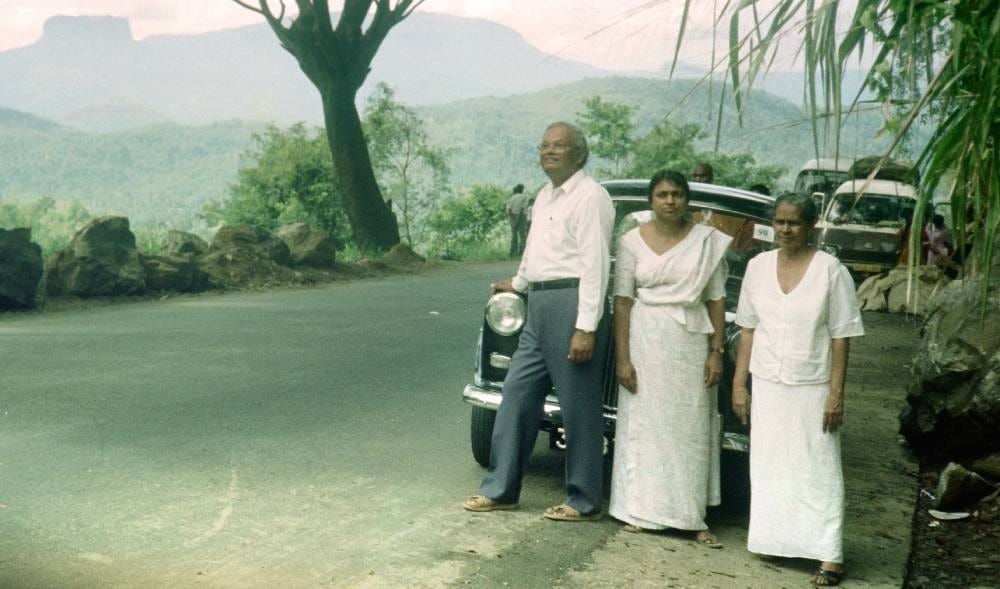
The message that my father had passed away arrived as a text from my brother in Sri Lanka while I was pitching to an investor in a board room somewhere in Toronto, Canada. My brother had called, but the phone was on vibrate and I ignored it. The echoing text arrived a short minute later. I don’t know why I reached into my pocket and glanced while I kept motioning at my slides, but I did. I remember I paused in mid-sentence and with the mind of a deer in headlights, I just continued.
As I was leaving shaking hands with the investor, for whatever reason, he asked, “Is everything okay”. Matter-of-factly, I answered, “My father just passed away, that was my brother on the phone.” I left.
I don’t know what he thought of me. I do know they didn’t invest in my startup. It is possible he thought I was callous, cold, or possibly in shock. I can’t remember if I had explained that I had just left Sri Lanka a mere fortnight past. I had seen my father at 81 after the brain surgery to remove the tumor that killed him anyway. He was in the same well-dressed pants and shirt, silver pen tucked asleep at the breast. My last vision was him waving, crying, holding on to my mother who had fretted over him. This was the last of the dozen good byes since they had moved to Sri Lanka and I to Canada.
The text had merely stated a pre-announced fate.
It was not home that I went when I arrived in Kingston, Ontario that afternoon by train from Toronto. Instead the taxi driver dropped me mid-afternoon on a weekday at the Pilot House pub. The waiter, James, poured me a Guinness. I sat at the corner table, opposite an empty chair, sipped the foam, played Take Me Home, Country Roads by John Denver, and shared a toast to my father.
At that point if you had asked me what he left behind I would have said my many memories. Maybe the numerous friends, patients, and relatives who toast his health now going well past a decade. I even went to visit the small area of the university dedicated to him after having been instrumental in its construction. His study where he saw patients at the farm on weekends with the tidy red ceramic floor remains, though it now doubles as a small buddhist shrine my mother uses daily. On a rare occasion I can see the shadows of his fingerprints in some of the books still dusty and unmoved.
Some years after, I thought back to my own life and I thought that what my father had left behind was probably reflected in the way I told my stories. I thought maybe my almost-obsessive need to connect with dear friends was something he had left in me. Maybe it was the way I laughed, the way I was always curious about history, or maybe it was in ABBA or BoneyM. “Duleepa-chuti-putha”, he would say while opening a cold Guinness at the apartment in Hong Kong, “play some Fernando, or Brown Girl In The Ring!” And that day when he passed and I had had that Guinness, I thought that simple act was something he had left behind.
Just a few years ago, I came across all the letters my father had written me. In them I thought I had found something he had left behind. They always started the same “My dear Chuti Putha”, my dear young son. In November 1993, he writes “It is raining heavily”, weather was a big theme. Politics, dogs, economics, and somehow getting me married off covers the rest. Always, in every letter, there was my mother, “Amma”, the “busybody”, without whom he would be “lost.”
Last year, my hair greyed and thinned. My cheeks took a slightly older shape. One morning, lathering my face to shave, there, staring out at me was none other than my father.